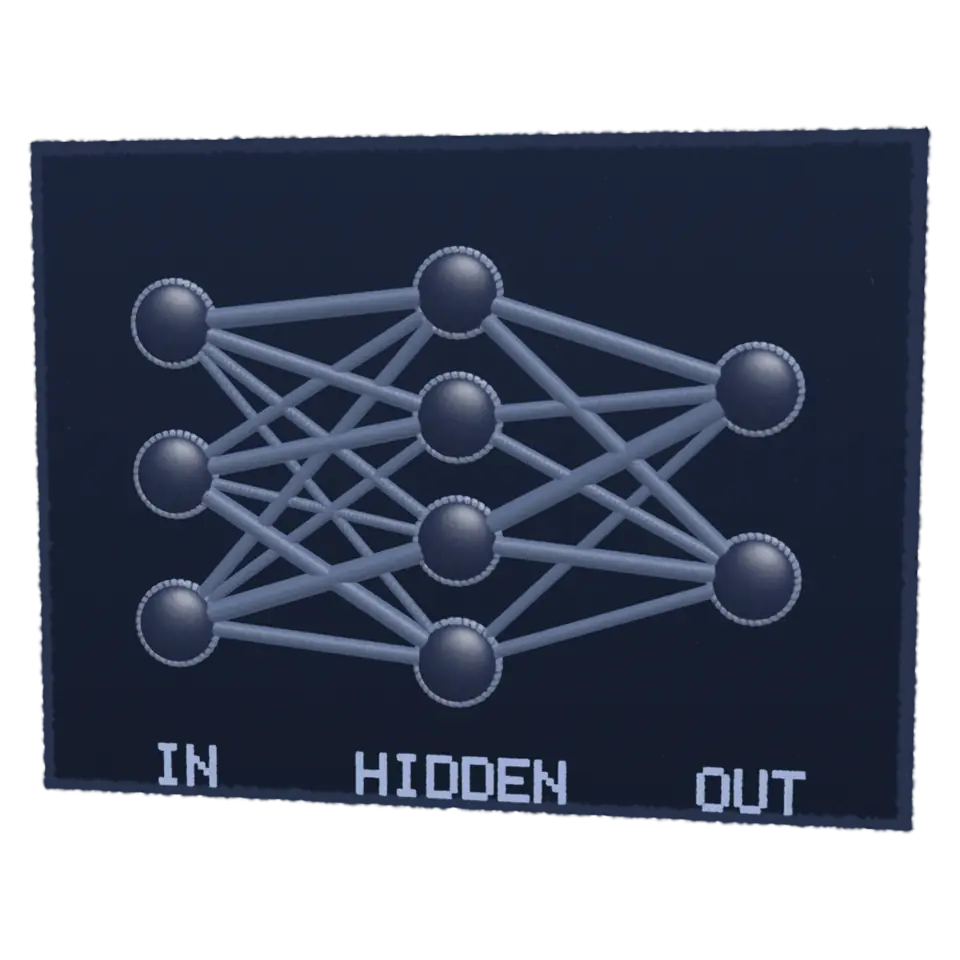
Fig. 32. §3 AI and Computing
Neural Network
A neural network is made of simple artificial neurons in layers.
1Facts
- Shelf
- AI and Computing
- Kind
- Built from a recipe
- Sound
- Yes
- Licenses
- Own work (made in the page)
2How to play
Tap it to send signals forward, then learn backward. Set its size in the Splash tab.
3Its controls
Table I. Every control on this Splash.
| Control | Kind | Range | Start |
|---|---|---|---|
| Forward and back | Tap | ||
| Train | Button | ||
| Inputs | Setting | ||
| Hidden layers | Setting | ||
| Neurons per hidden layer | Setting | ||
| Outputs | Setting | ||
| View | List | 2 choices | Poster (2D) |
4About it
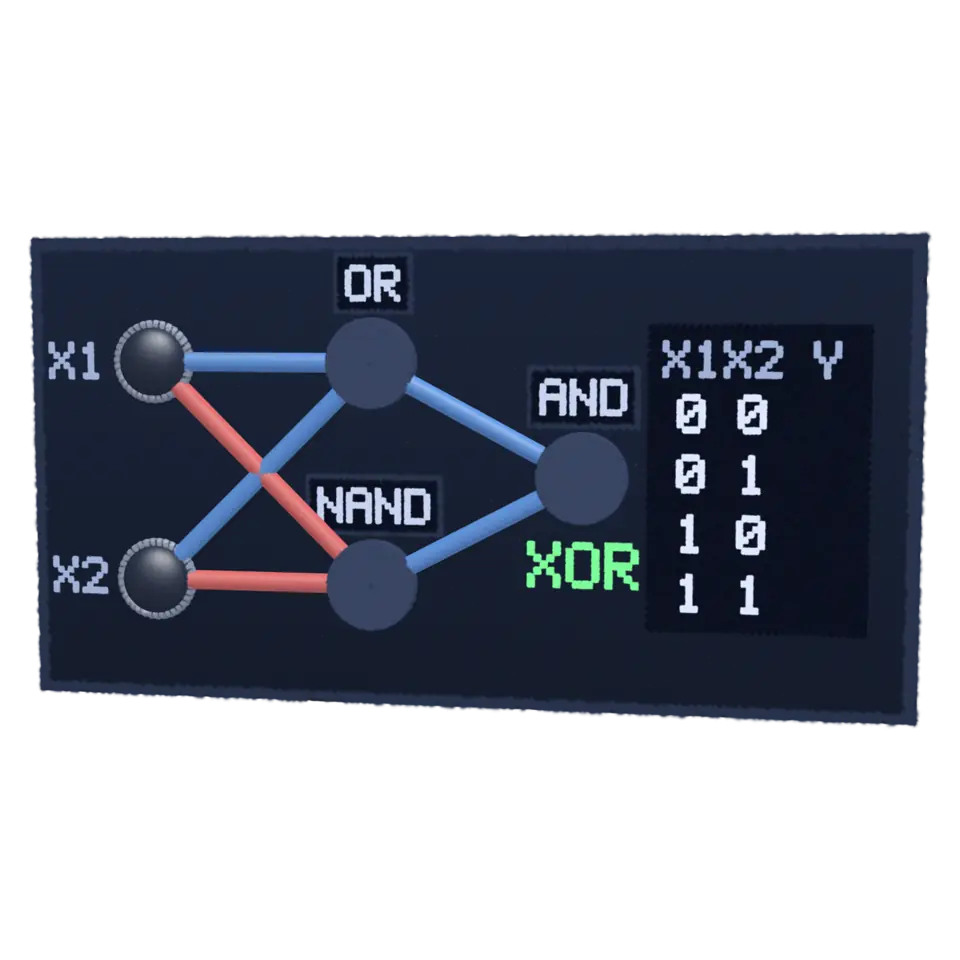
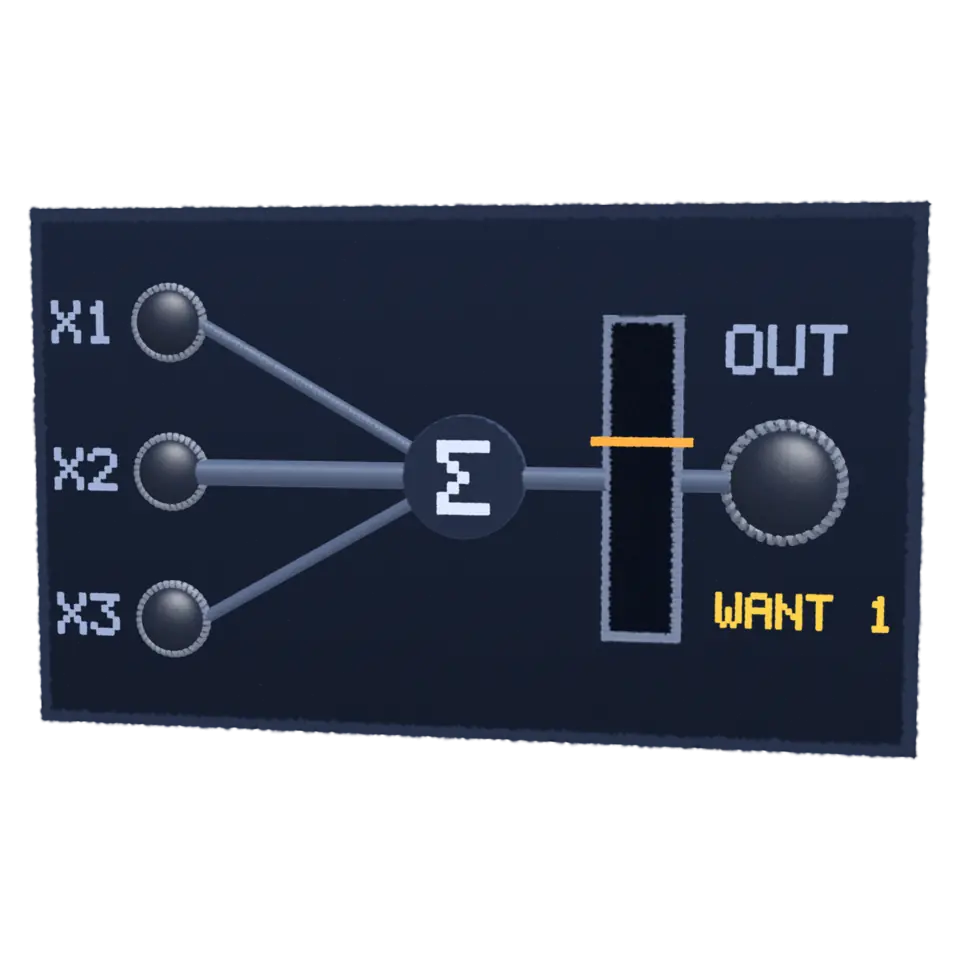
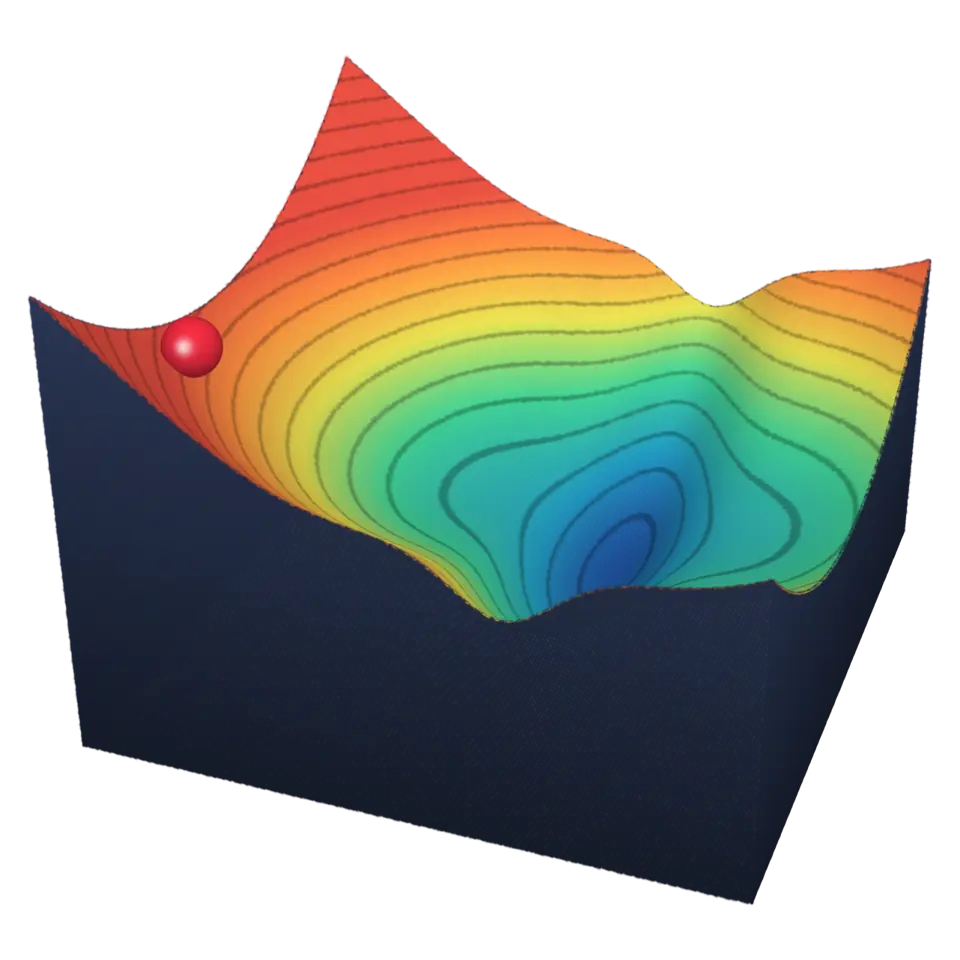
A neural network is made of simple artificial neurons in layers. Each neuron adds up the signals coming in, each multiplied by a weight, and passes on a signal of its own; the weights are what the network learns. In training, a forward pass makes a guess, and backpropagation sends the error back through the network, finding how each weight affects the error; an optimizer then adjusts the weights.
Tap it: pulses run from the inputs through the hidden layer to the outputs, each neuron glowing as strongly as it fires, and one output wins. Then red pulses run back and the wires thicken or thin as the weights change. In the Splash tab, set the number of inputs, hidden layers, neurons and outputs, and pick the poster or a 3D model. The pulses and changing wires illustrate training; this splash repeats a prepared example.
5Details
- Splats
- Opens at 200,000 at Mid Detail, 120,008 at Low, and up to 790,000 at Max
6Is it right?
The activations come from a real sigmoid forward pass for every supported size. The backward pulses and changing wire widths illustrate training, but they do not calculate a loss gradient.
Correct.
Each neuron applies an activation to a weighted sum.[1]
Every layer is checked independently as sigmoid of the incoming weighted sum plus its bias, including the default 3-4-2 network.
Correct.
The size controls choose a small multilayer network.[1]
The 108 control combinations stay within the 14-neuron cap and use the same forward calculation.
Simplified.
Backward pulses and wire changes are a prepared training illustration.[2]
Wire changes use a repeating index-based pattern; no target, loss, chain rule, or updated forward pass is used.
- [1]Multilayer perceptrons, Dive into Deep Learning authors
- [2]Backpropagation, Dive into Deep Learning authors
- Simplified
- Inputs and weights are deterministic examples. The apparent backward update uses fixed wire changes rather than backpropagation; the total size is capped at 14 neurons.
7Sources and credits
Made in Splashery. Its code is MIT.