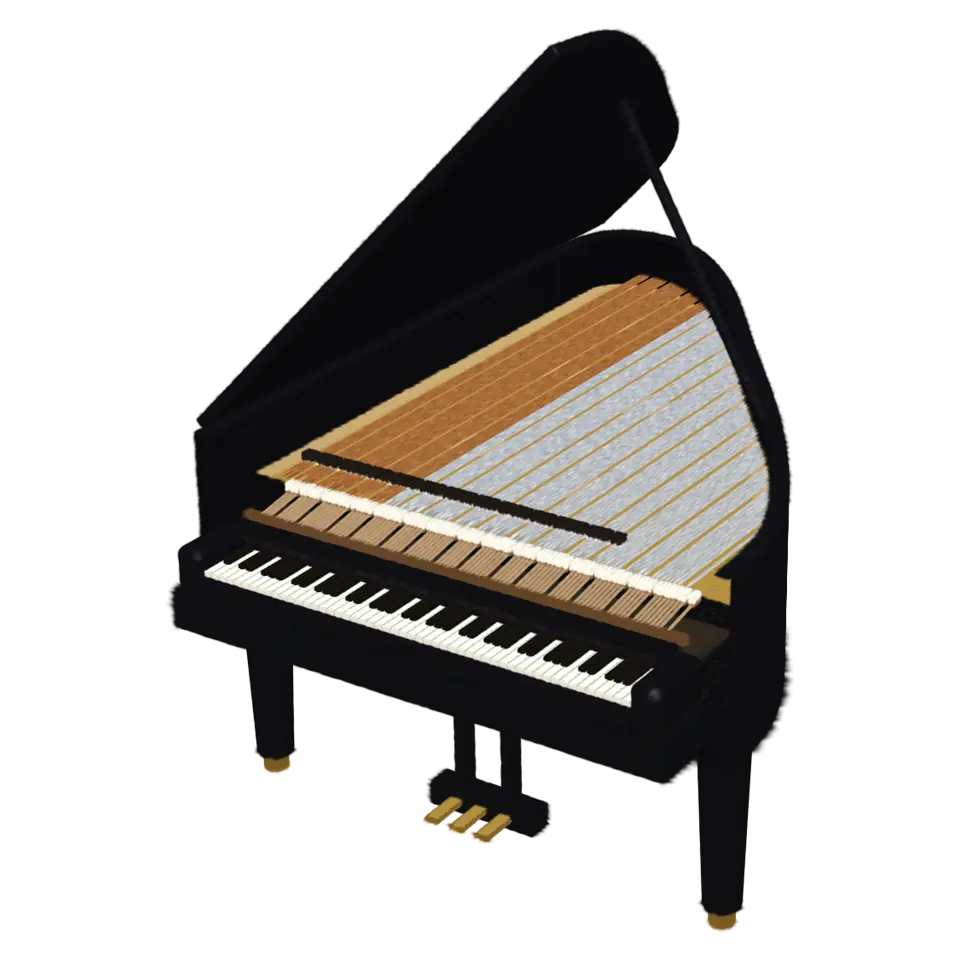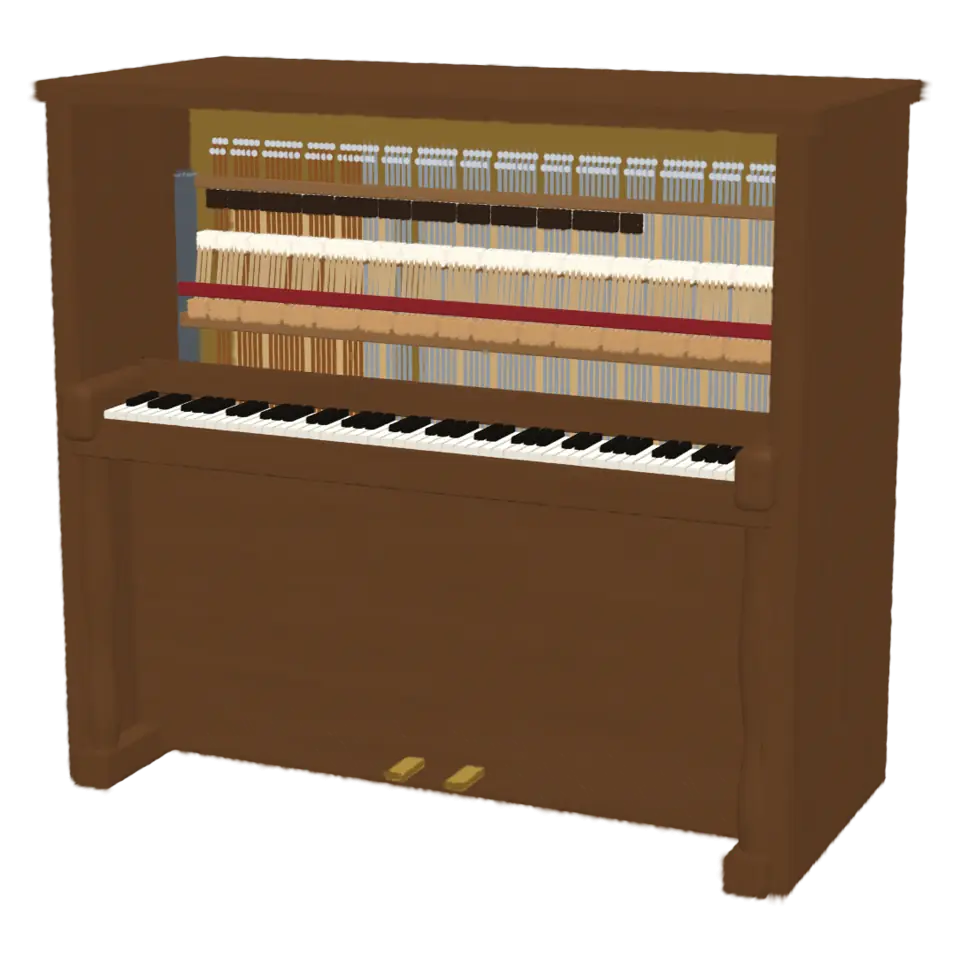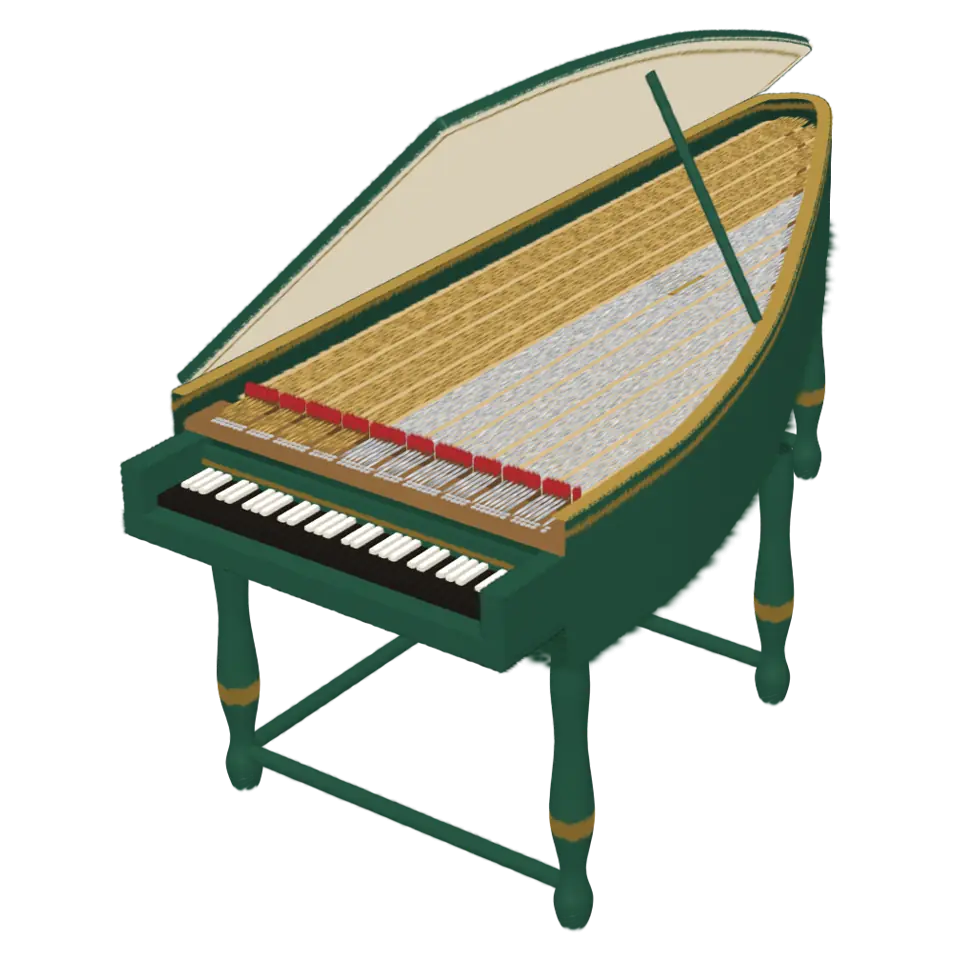
Fig. 279. §16 Music
Harpsichord
A harpsichord plucks its strings instead of striking them.
1Facts
- Shelf
- Music
- Kind
- Built from a recipe
- Your own
- Voice tuner (labs)
- Sound
- Yes
- Licenses
- Apache-2.0, MIT, CC BY 4.0
2How to play
Tap a key to pluck its string, or drag along the keys. Tap anywhere else for a minuet.
3Its controls
Table I. Every control on this Splash.
| Control | Kind | Range | Start |
|---|---|---|---|
| Play the opening | Tap | ||
| Play the opening | Button | ||
| Play a key | Button |
4About it
A harpsichord plucks its strings instead of striking them. Each key lifts a thin wooden jack, and a small quill on the jack catches the string on the way up. Because a pluck sounds the same however hard you press, players shape their music by timing. Harpsichords were the main keyboard of the 1600s and 1700s.
This one is painted in the French style, with black naturals and pale sharps. Tap a key and its jack rises, plucks, and the string quivers until the jack's felt stops it. Tap anywhere else for the Minuet in G from the notebook Bach kept for his wife, Anna Magdalena. Open a MIDI file of your own in the Splash tab.
5Details
- Splats
- Opens at 200,000 at Mid Detail, 119,997 at Low, and up to 530,000 at Max
6Sources and credits
Made in Splashery. Its code is MIT.
7Libraries
- Apache-2.0
- Basic Pitch, ONNX (lane Audio piano, October 21, 2026)
- MIT
- ONNX Runtime Web 1.30.0 (its modules)
- CC BY 4.0
- Piano transcription note model, ONNX (lane Audio piano, October 21, 2026)